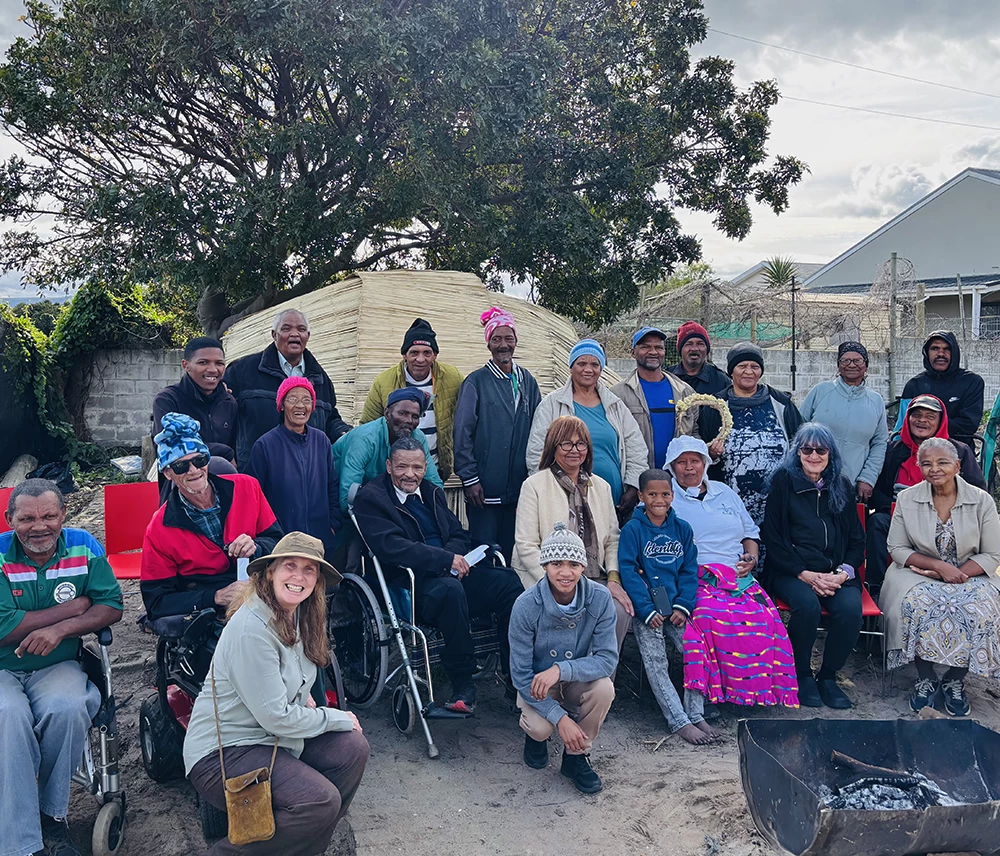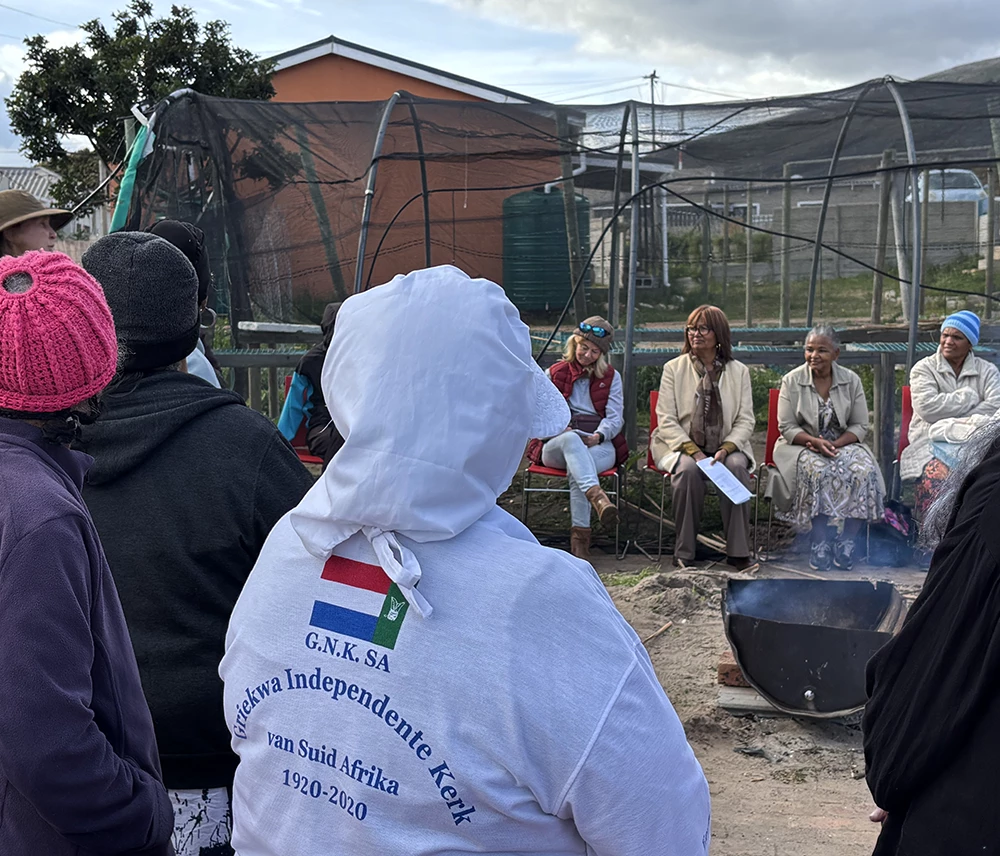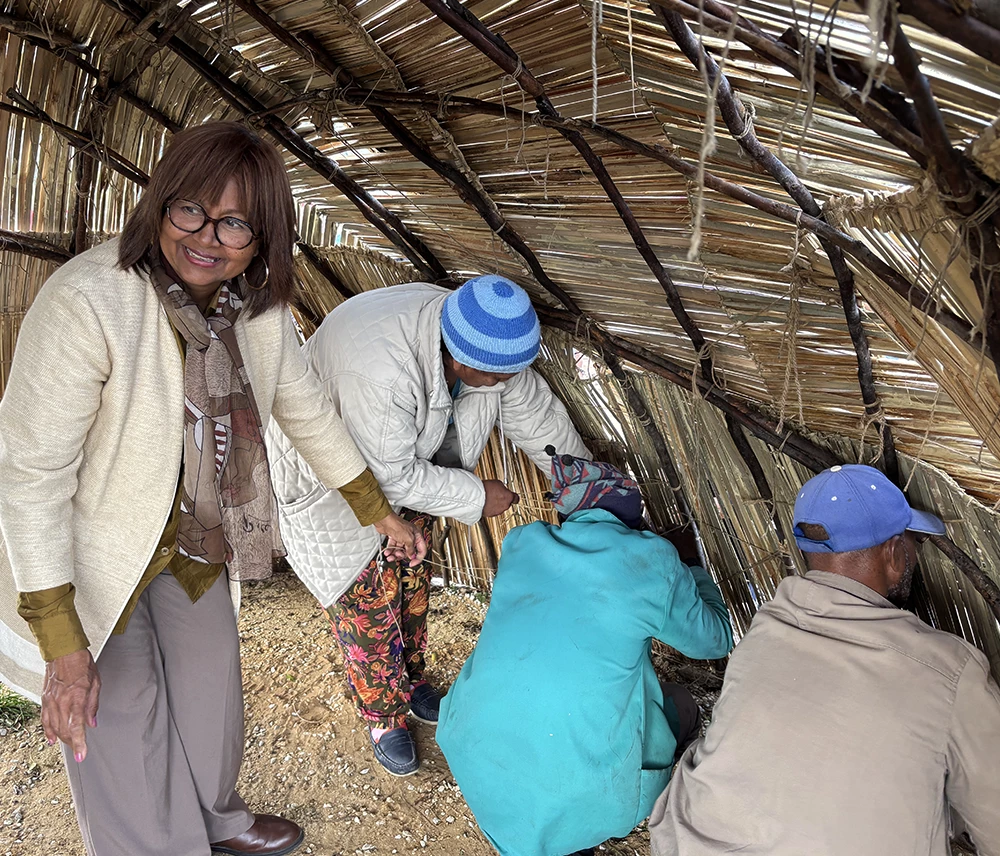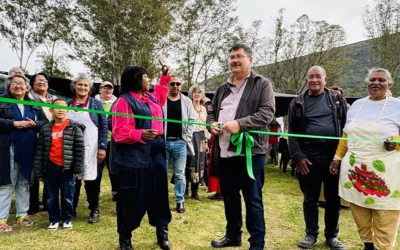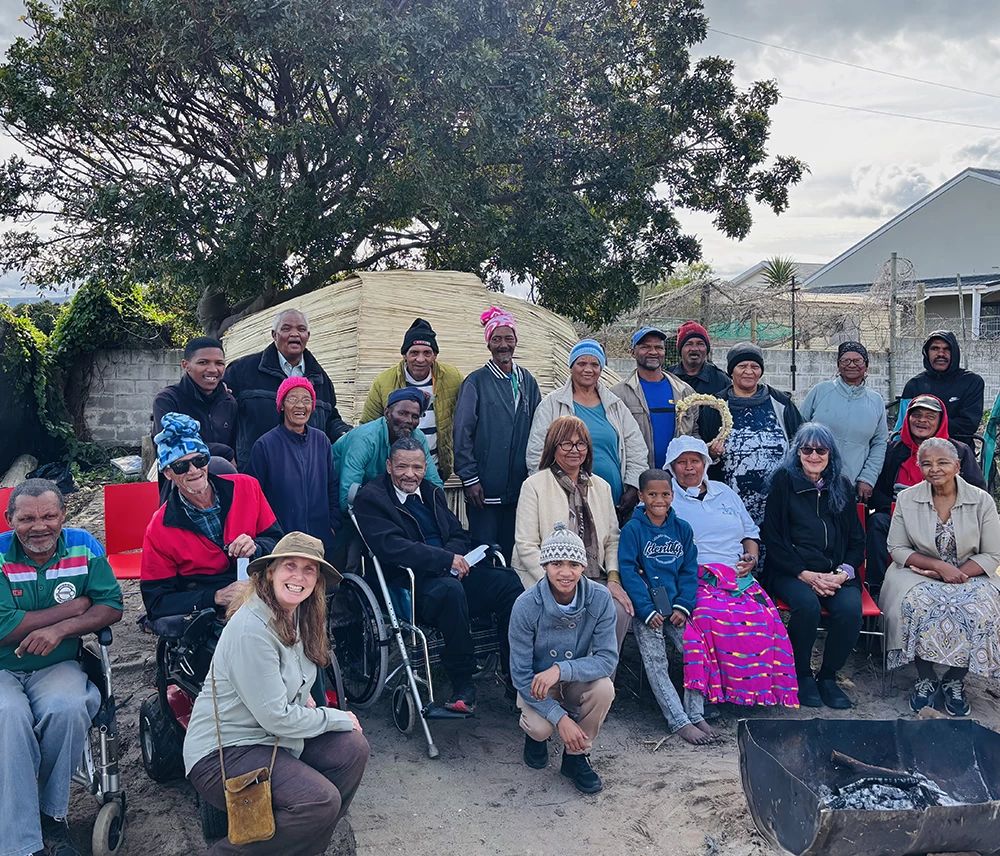
On Friday 10 July in Hawston, the Griekwa community gathered for a moment that felt both ancient and urgently present: the ceremonial finishing and blessing of a !Haru oms, the traditional mat house that has anchored Griqua identity for generations.
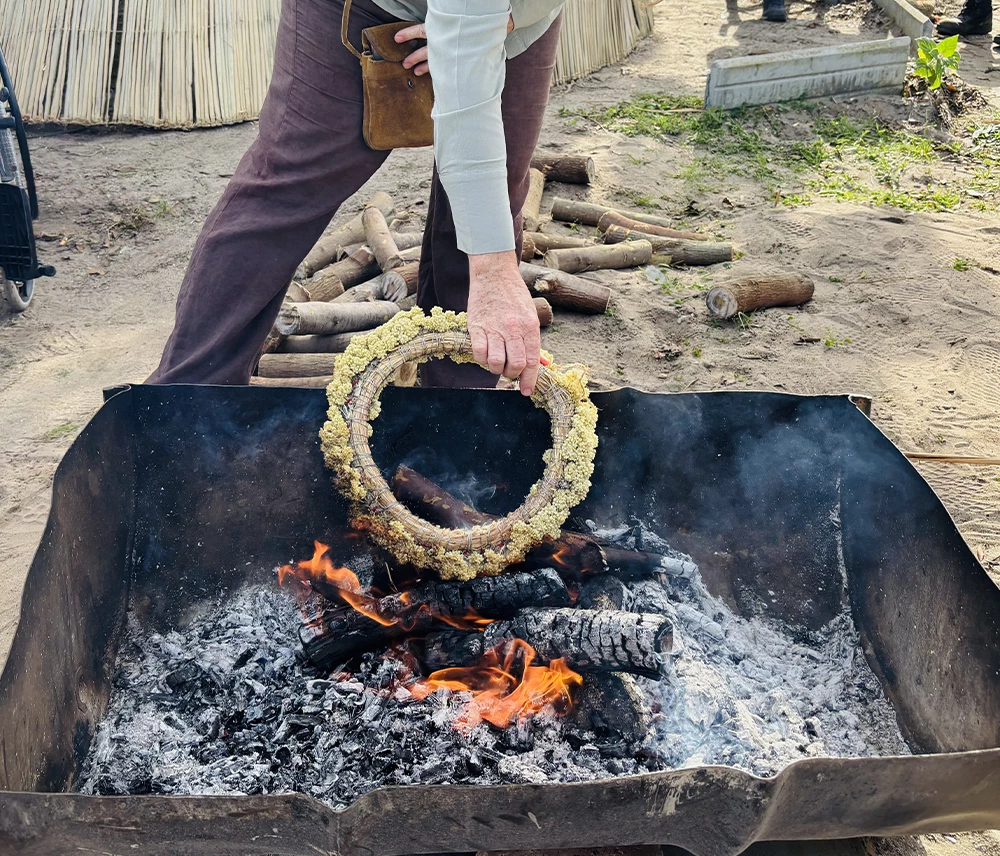
I was honoured to witness and participate in this symbolic act — the laying of the final reed mat, the burning of Kooigoed, and the offering of a spiritual blessing. Every movement, every pierced reed, and every prayer carried the weight of tradition and the hope of renewal.
The hut was brought to life by the Griqua National Conference, the Hawston community, the Overberg Wheelchair Association (OWA), and other participants in a National Heritage Council–funded project.
Stonefly Environmental Education designed, enabled, and managed the project, guided by three integrated objectives: ecological restoration, cultural revitalisation, and tourism product development. The project advances wetland rehabilitation by using an invasive plant species for traditional mat‑making, while advocating for Griekwa cultural practices and laying the foundation for a distinctive cultural tourism experience that supports the long‑term sustainability of the OWA.
The traditional mat plant, Cyperus textilis, has dwindled due to siltation and pollution of Western Cape wetlands. Using Typha capensis is innovative: its removal helps restore wetland habitat while creating income‑generating opportunities through mat‑making for traditional homes, blinds, and ceiling covers.
Central to the ceremony was the affirmation of Khoekhoegowab, often called the oldest living tongue of Southern Africa. This language is a vessel of ecological knowledge, a cultural anchor, and a marker of First Nation identity.
The final mat was placed, marking both completion and a new beginning. A circle of Kooigoed (Helichrysum sp.) was burnt, symbolising unity, protection, and the cyclical nature of heritage.
Among those present was Miss Hazel le Fleur‑Maree, great‑granddaughter of Paramount Chief Andries Abraham Stokenström Le Fleur and Crown Mother Rachel Susanna Kok, and youngest daughter of Adam (Muis) Kok IV.
As a tourism entrepreneur and recent winner of the DEDAT CBT Entrepreneur Pitch Competition we presented, Hazel embodies the bridge between cultural revival and sustainable tourism.
The Hawston Heritage Project, of which the !Haru oms is a vital part, stands as a living testimony to the Griekwa people’s bond with earth, sea, and spirit. Here, culture is not only preserved — it is revived in the rhythm of breath, fire, and community.
Friday’s event was, at its heart, a homecoming. The final mat symbolised return — to identity, land, language, stewardship, and community. Heritage is not meant for display behind glass; it is meant to be built, blessed, lived, and shared.